My Story
I Didn't Set Out to Create a Coaching Program.
I Set Out to Understand Why So Many Brilliant Women Were Losing Themselves While Trying to Belong.
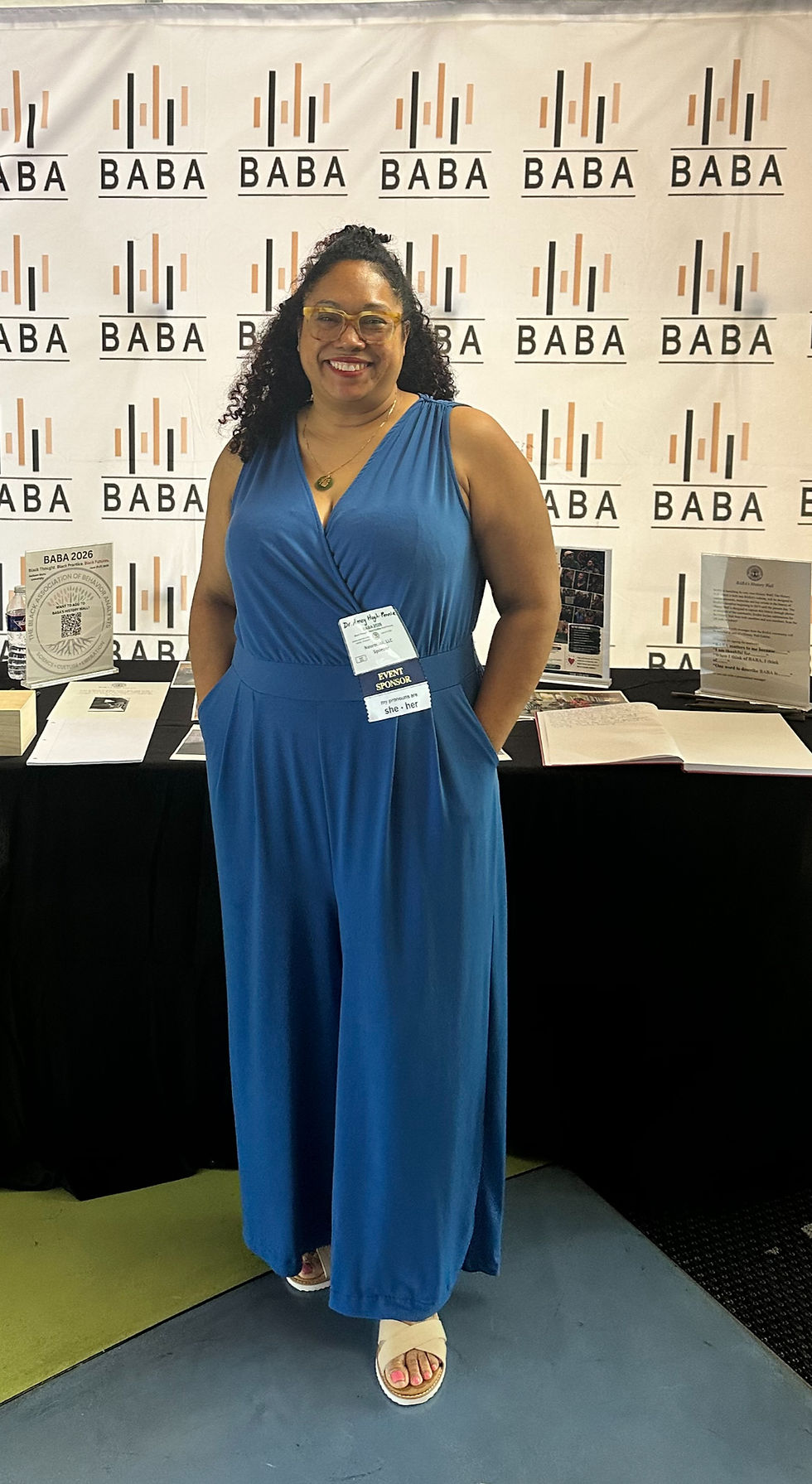
For much of my life, I believed success would eventually answer the questions I couldn't explain.
If I worked harder...
If I earned another degree...
If I became a better leader...
If I achieved more...
Surely one day I would finally feel like enough.
Instead, I became increasingly exhausted.
Not because I lacked resilience.
Not because I wasn't capable.
But because I had spent years adapting to environments that rewarded performance while overlooking authenticity.
Like many neurodivergent women—especially those of us living at the intersections of race, culture, gender, sexual identity and disability—I became exceptionally skilled at reading the room before honoring myself.
I learned to:
Overprepare.
Overexplain.
Overachieve.
Code-switch.
Mask.
Carry more than anyone realized.
And somewhere along the way, I became disconnected from the very person I was working so hard to prove was enough. Myself.
Today, I understand that what I was experiencing wasn't simply burnout.
It was the cumulative impact of chronic adaptation.
Looking Back, The Clues Were Always There.
As a child, I was identified as gifted.
I loved learning. Reading, writing, language, science, and curiosity became places where I thrived.
At the same time, I was living with childhood lupus, navigating chronic illness while managing challenges that few people recognized.
My academic strengths often overshadowed the areas where I struggled—attention, executive functioning, mathematics, and the invisible mental effort required to keep everything together.
Because I was achieving, no one asked a different question:
"What might she be navigating?"
Years later, after taking an introductory psychology course, I quietly began recognizing pieces of myself in descriptions of ADHD.
The pieces fit—but they didn't explain everything.
Not the masking.
Not the perfectionism.
Not the people-pleasing.
Not the code-switching.
Not the constant pressure to outperform expectations while carrying identities that were often misunderstood.
What I didn't realize then was that I wasn't just adapting to neurodivergence.
I was adapting to systems.

Success Didn't Protect Me From Disconnection.
Over the next twenty-five years, I built a career I was proud of.
I served as a school leader, executive clinical leader, university instructor, consultant, behavior scientist, ethics educator, speaker, and organizational strategist across the United States, Canada, and Asia.
I led national clinical teams.
Directed schools.
Built programs.
Published internationally cited research.
Taught graduate students.
Served on ethics committees.
Helped organizations navigate complex systems change.
I was recognized for ethical leadership and even received the Outstanding Teacher Award from my graduate students for teaching professional ethics.
From the outside, I looked successful.
Inside, I was asking a different question.
Why did success still feel so exhausting?
The answer wasn't that I needed to work harder.
It was that I had spent years adapting to environments that often valued productivity over humanity, compliance over curiosity, and performance over authenticity.
Eventually, I reached a point where my professional integrity required me to stop participating in systems that no longer aligned with my values.
Some of the most difficult decisions of my career became the most defining.
They taught me that true ethics isn't simply about following rules.
It's about protecting human dignity—even when doing so comes at a personal cost.

My Work Changed When My Question Changed.

For years, I asked:
"What's wrong with me?"
Today, I ask:
"What have I been navigating?"
That single question transformed everything.
It changed how I understood myself.
It changed how I understood burnout.
It changed how I understood behavior.
And it changed how I understood leadership.
As I connected the dots between behavioral science, neuroscience, ethics, trauma, organizational systems, culture, and my own lived experience, I realized something profound:
Many neurodivergent women are not burned out because they're doing too much.
They're burned out because they've spent years adapting to environments that required them to disconnect from themselves in order to succeed.
Burnout wasn't the beginning of the story.
Identity disconnection was.
That realization became the foundation for the NeuroLink™ Chronic Adaptation Model™, the PROTECT™ Framework™, and Reclaim Your Power™
—a movement that helps women reconnect with themselves, rebuild self-trust, and create lives where they no longer have to sacrifice their authenticity to belong.
Why I Do This Work...

I don't believe people are broken.
I believe many of us have become extraordinarily skilled at surviving environments that were never designed with us in mind.
My work isn't about helping women become better at adapting.
It's about helping them understand :
what they've been navigating, reclaim who they are beneath the adaptation, and create lives rooted in authenticity, connection, and liberation.
Because I believe the most powerful transformation doesn't happen when we become someone new.
It happens when we finally come home to ourselves.
Every program I have developed reflects a different part of this mission.
The Programs I Created
01
🌿 Reclaim Your Power™
Supports Black, LatinX, Indigenous, Multiracial, LGBTQIA+, and other minoritized neurodivergent women in moving from chronic adaptation, burnout, and identity loss to self-trust, nervous system regulation, and authentic living through the PROTECT™ Framework.
02
🌿 Grounded & Growing™
Supports neurodivergent families in moving from survival mode to connection, confidence, and advocacy through the PAUSE™ Framework by helping parents understand behavior through the lens of regulation, relationships, and the whole family system.
03
🌿 Consulting & Professional Development
Partners with schools, organizations, and leaders to build culturally responsive, neurodiversity-affirming, and ethically grounded systems that prioritize human dignity, psychological safety, and sustainable change.


Ethics Isn’t Just Part of My Work.
It’s the Foundation of Everything I Build.

Long before I founded NeuroLink™, I believed that meaningful change required more than technical expertise—it required ethical courage.
Throughout my career, I’ve taught graduate-level professional ethics to future behavior analysts, educators, and interdisciplinary professionals.
I served on the Ethics Board for one of Canada’s first Ministry-funded group ABA curriculum initiatives at Surrey Place Centre, collaborated on the development of ethics education resources, and was honored to receive the Outstanding Teacher Award from students at the University of Western Ontario for teaching ethics.
But the most important lessons I’ve learned about ethics didn’t come from a textbook.
They came from the moments when doing the right thing required asking difficult questions, challenging systems, and making decisions that aligned with my values—even when doing so carried personal or professional risk.
Those experiences reinforced something I believe deeply:
Ethics is not simply about compliance.
It’s about protecting human dignity.
It’s about creating systems where people are seen, heard, and respected.
It’s about choosing transparency over fear, compassion over convenience, and integrity over comfort.
That philosophy shapes every coaching conversation, every consultation, every workshop, and every framework I create.
Because people deserve support that is not only effective—but deeply human
The Movement I’m Building

At NeuroLink™, we’re building more than programs.
We’re building a future where neurodivergent people no longer have to sacrifice their authenticity to belong.
Where understanding replaces judgment.
Where connection replaces compliance.
Where identity is reclaimed instead of hidden.
Where families, schools, workplaces, and communities recognize that sustainable change begins with dignity.
Because the goal isn’t simply to help people survive.
It’s to help them reclaim their power, strengthen their relationships, transform the systems around them, and create a legacy where future generations no longer have to adapt in order to be accepted.